
Most Americans have been told real estate is the path to passive income. Buy properties, collect rent, build wealth. For people who bought early and hold cheap debt, that story still has chapters left. For someone trying to buy an investment property in 2026 at current rates and prices, the cash-flow math is often ugly.
The $400,000 property, without the brochure
Take a four-hundred-thousand-dollar investment property. Twenty percent down is eighty thousand. Closing costs might run eight thousand. Initial repairs and updates another ten. You are near ninety-eight thousand dollars out of pocket before a tenant ever pays rent.
On many markets in 2026, you are fortunate to clear five hundred dollars a month after mortgage, taxes, insurance, and maintenance, a figure often cited in landlord communities such as BiggerPockets. Then you still live with vacancies, tenant screening, tax surprises, and repairs that can erase months of profit in a weekend.
That does not make rentals a bad long-term asset for people with capital, experience, and patience. It does mean that if monthly cash flow is the goal, other structures can put far less capital to work and produce income sooner.
What a managed eBay store looks like on capital
Industry-wide, managed eBay store partnerships often start around twenty thousand dollars or more depending on operator and scope, setup, working capital, and the buffer you need to fund cost of goods after sales. There is no mortgage, appraisal, or closing package. Under a sell-first model with wholesale suppliers, you are not buying a warehouse of unsold stock hoping demand appears. See how eBay still works as a demand engine for this kind of store.
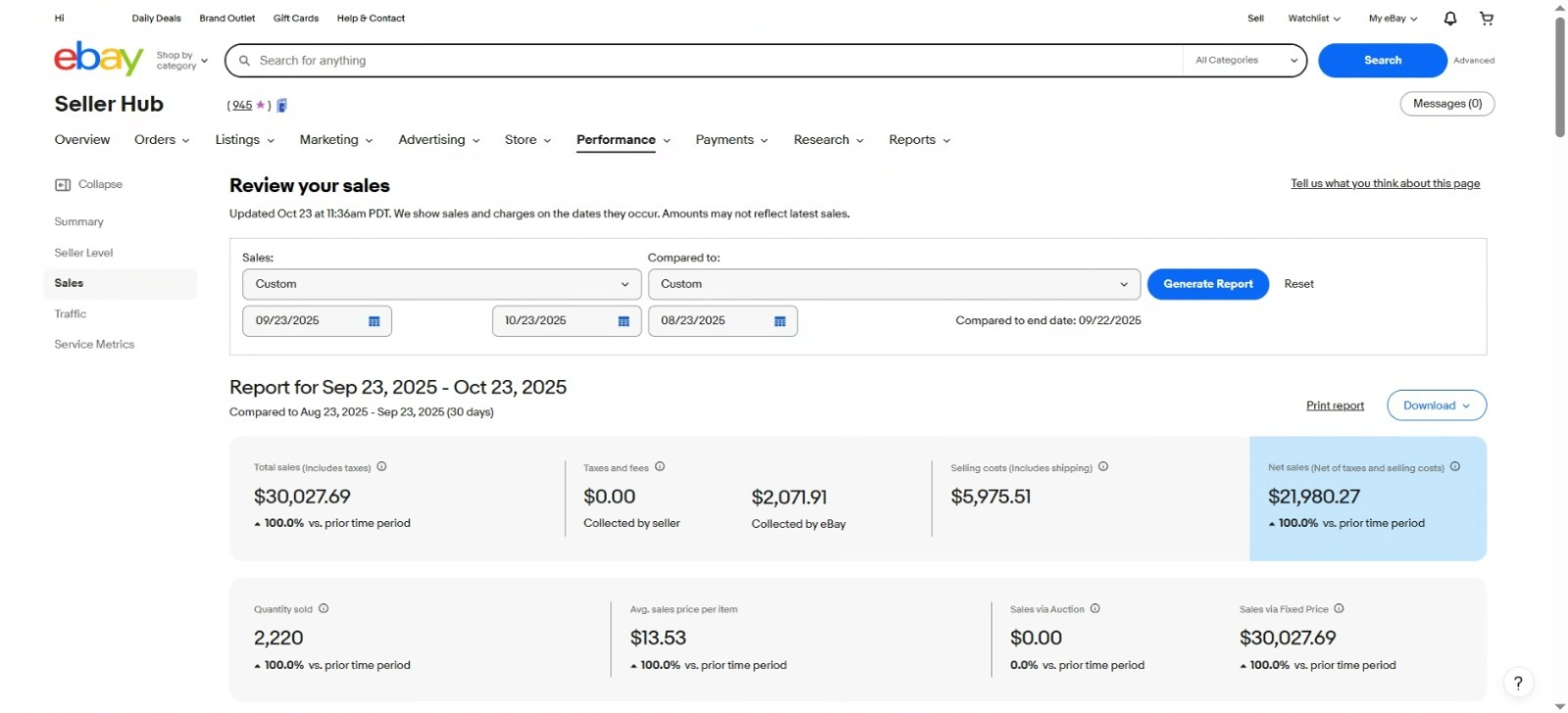
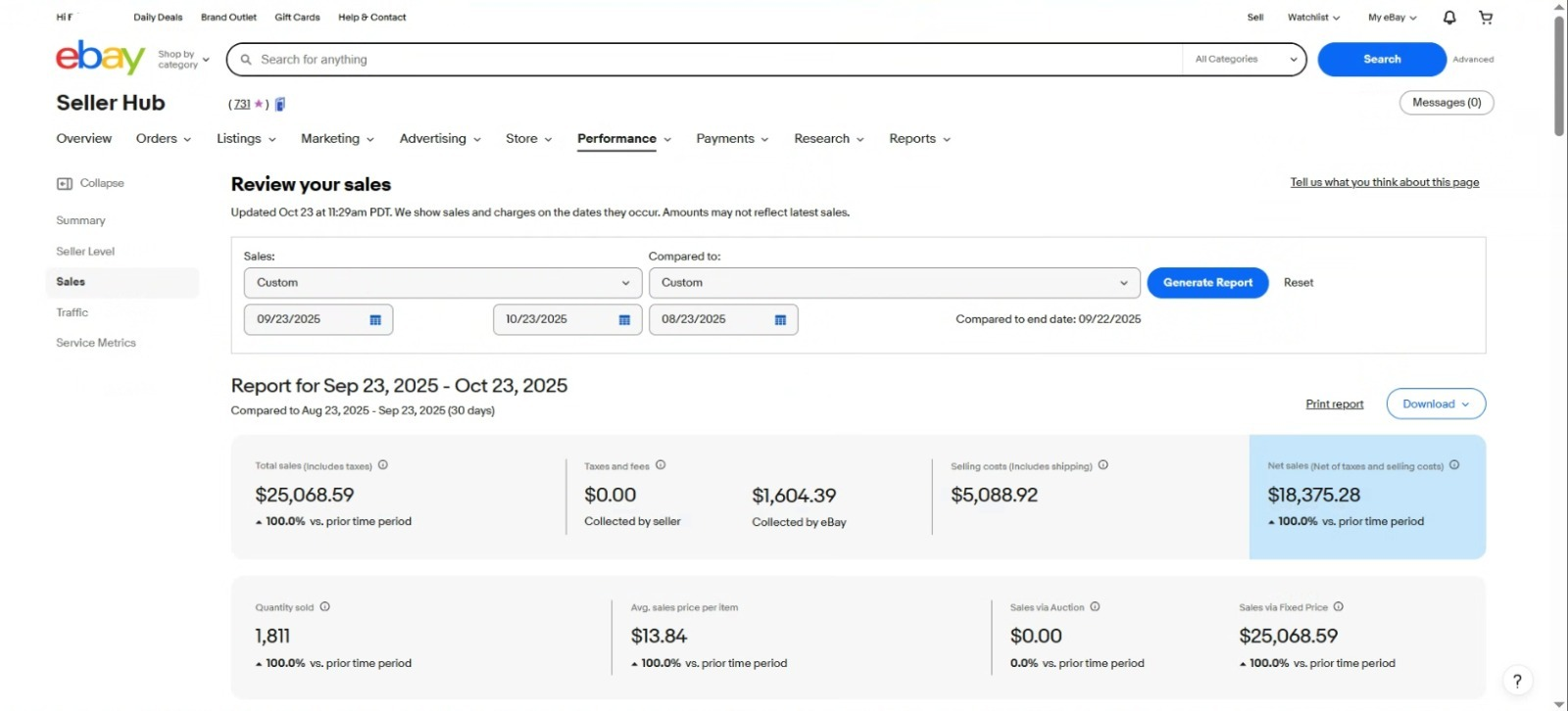
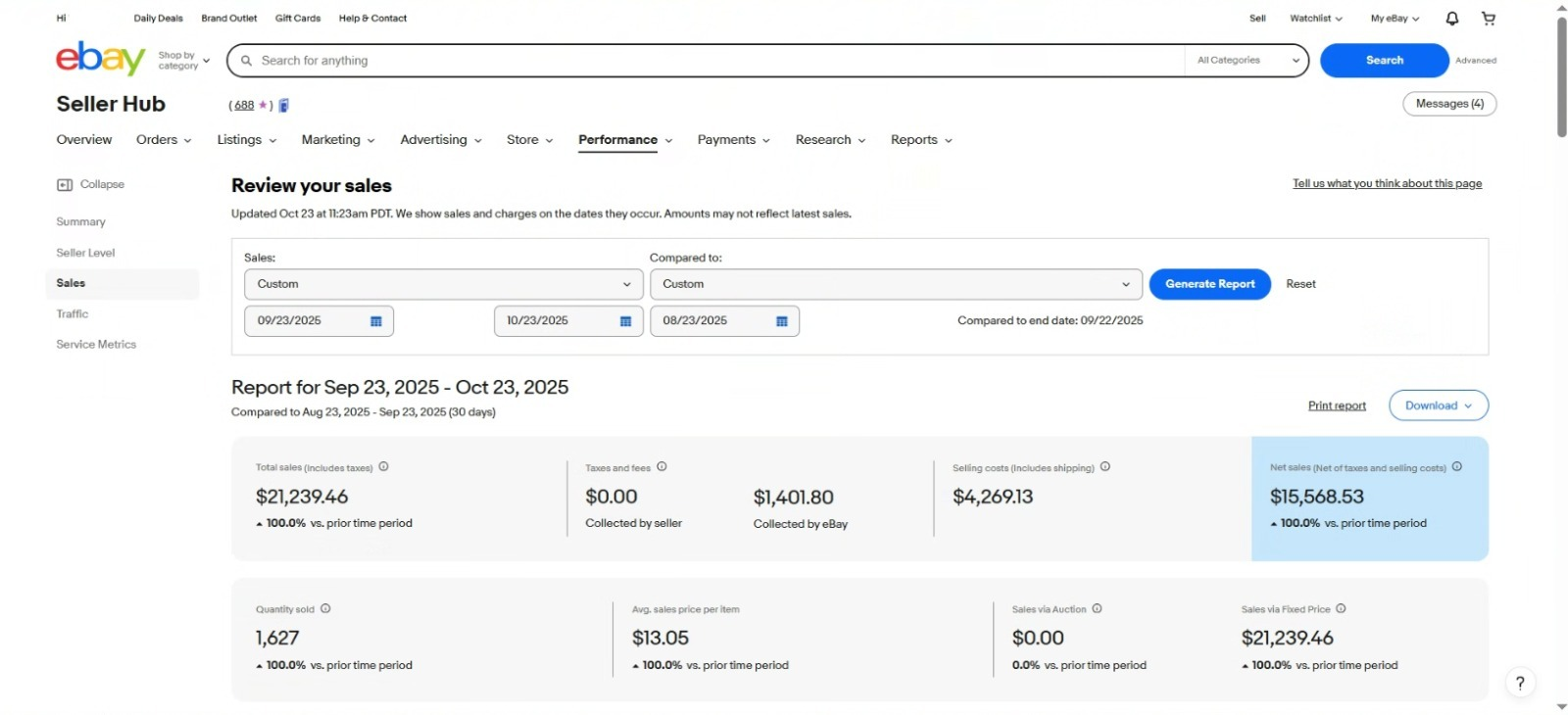
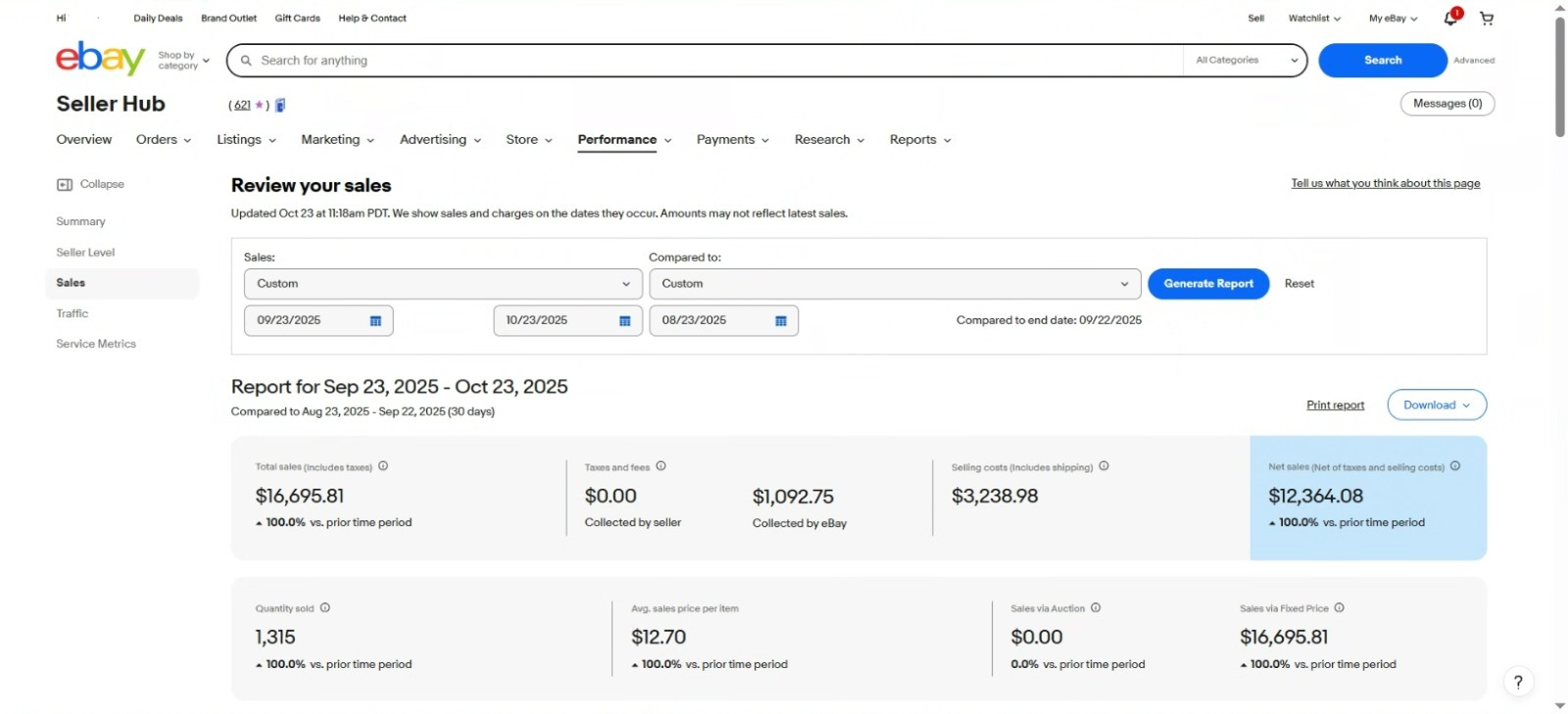
Those screenshots are revenue, not profit. Cost of goods still comes out. What matters structurally is that inventory is purchased after the sale is confirmed, so you are not carrying the same dead-stock risk a buy-first retailer accepts. Partner returns vary. Our FTC-backed earnings claims disclosure is the place to see averages and ranges, not a blog post.
Liquidity and market conditions
That ninety-eight thousand dollars in a property is locked up. Emergencies and better opportunities wait on a sale or refinance. Working capital in a sell-first eCommerce partnership turns over with sales. It is still business capital with risk of loss. It is not trapped in drywall.
Real estate in 2026 still faces elevated rates, prices near cycle highs in many metros, insurance costs that have jumped sharply since 2020, rising property taxes, and inflated maintenance. eCommerce as a category continues to grow mid-single to low-double digits annually, on mature platforms, with consumer habits that permanently shifted online. Technology has also cut some of the labor cost of running catalogs, which is a different advantage than appreciation.
Scaling and diversification
Doubling rental income usually means another down payment, another underwriting cycle, another property to manage. Linear capital, linear headaches. Doubling eCommerce income, when the store is working, means reinvesting into more products and volume on systems that already exist, same operator hours from your side if the partnership is structured that way.
Diversifying real estate by neighborhood or city is still real estate: illiquid, local, operationally heavy. Diversifying an eBay catalog across hundreds of SKUs, categories, and price points is a different kind of spread. One underperforming product does not equal a vacant unit.
A decision framework, not a sermon
Choose real estate if you have large capital, enjoy or already run property ops, can wait years for the thesis, and bought (or can buy) at terms that actually cash flow. Choose a managed eCommerce path if you want cash flow on a shorter horizon, need liquidity relative to a down payment, and prefer ownership without becoming a landlord or a full-time seller.
Many professionals do both over time: build eCommerce cash flow first, then use profits toward real estate when the numbers make sense. Sequencing beats waiting for a perfect rental that may never clear five hundred dollars a month after expenses.
Frequently Asked Questions
1. How does e-commerce cash flow compare to real estate?
+E-commerce can generate $2,000-5,000+ monthly cash flow with $0 upfront capital (sell-first model), while a $400,000 investment property might cash flow $500/month after expenses. E-commerce also generates income faster (months vs years) and doesn't require property management.
2. What are the capital requirements for each?
+Real estate requires $100,000+ down payments per property, while e-commerce can start with $0 upfront using the sell-first, buy-later model. E-commerce also doesn't require financing, appraisals, or closing costs.
3. Which requires more time investment?
+Real estate requires 5-10 hours monthly for property management, tenant relations, and maintenance. Managed e-commerce stores require minimal time from you, as the operating partner handles daily operations.
Disclaimer: Performance figures referenced are based on our earnings claims disclosure and reflect historical results from January 2025 through December 2025. These figures are not a promise or guarantee of future performance. Results vary widely based on factors including product selection, platform policies, account health, customer demand, pricing, and operational execution. This is a business opportunity, not an investment, and there is risk of loss. Our FTC-backed earnings claims disclosure shows 32% ROI on inventory sold from January 2025 through December 2025.